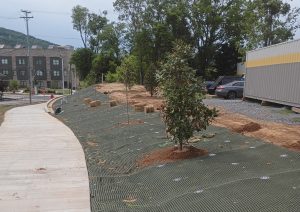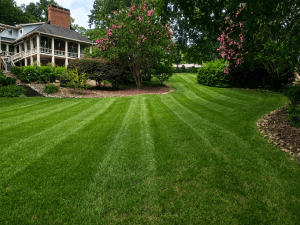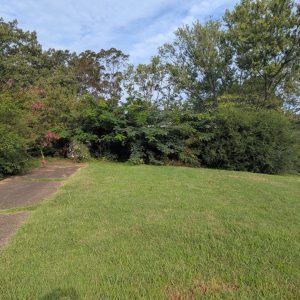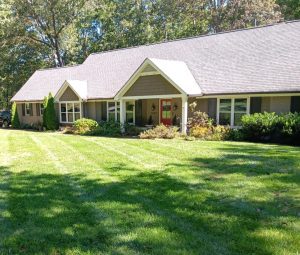
For commercial properties, lawn and landscape maintenance is not just about appearance. A properly maintained exterior helps protect your business image, reduce pest and rodent harborage, improve parking lot visibility, support stormwater function, and help keep the property aligned with City of Chattanooga maintenance expectations.
Galloway’s Lawn Service helps commercial property owners, managers, and facility teams stay ahead of these issues through routine mowing, trimming, landscape maintenance, cleanup visits, and site-specific groundskeeping plans.
Overgrowth Can Become a Code, Safety, and Image Problem
The City of Chattanooga identifies litter and overgrowth as property maintenance issues. City guidance states that premises with grass, underbrush, or weeds must be maintained below ten inches, and properties must be kept free of accumulated garbage, rubbish, refuse, and waste material. [1]
For a business, overgrowth can quickly send the wrong message. A commercial property with tall grass, unmanaged weeds, overgrown beds, and visible trash can appear neglected even when the business inside is operating professionally. That appearance can affect customers, tenants, employees, inspectors, neighboring properties, and potential buyers or investors.
Routine commercial lawn care helps keep the property looking intentional, active, and professionally managed.
Tall Grass and Debris Can Encourage Rodents and Pests
Overgrown grass, brush, leaf piles, dense groundcover, and trash can create shelter and travel routes for rodents. Public health and pest-management agencies commonly recommend removing food, water, and shelter sources as a key step in preventing rodent activity. [8]
This matters for commercial properties because rodents do not stay politely outside. Once a property provides cover near dumpsters, loading areas, fence lines, storage areas, foundations, or back entrances, rodents may move closer to buildings and look for entry points.
Routine groundskeeping can help by:
-
Keeping grass and weeds controlled
-
Trimming dense vegetation along buildings, fences, and parking areas
-
Removing trash and windblown debris
-
Keeping dumpster areas cleaner
-
Reducing leaf piles and landscape debris
-
Keeping access paths and building edges visible for inspection
The goal is not to replace pest control service. The goal is to make the property less attractive to pests in the first place.
Overgrowth Can Also Contribute to Bug Pressure
Commercial properties with tall grass, leaf litter, brushy edges, and damp shaded areas can create favorable conditions for ticks and other pests. The CDC recommends clearing tall grasses and brush, removing leaf litter, and mowing frequently as part of reducing tick habitat around maintained areas. [9]
Mosquito concerns are usually tied to standing water, but overgrown properties often make it harder to see clogged drains, low spots, discarded containers, blocked gutters, and debris-filled areas where water can collect. The CDC recommends removing standing water from items such as tires, buckets, planters, trash containers, and similar items because mosquitoes lay eggs near water. [10]
Cleanup visits help address this by removing trash, checking common debris areas, and improving the visibility of drainage problems before they become larger issues.
Overgrowth Near Buildings Can Contribute to Property Damage
Vegetation that is allowed to grow directly against buildings can trap moisture, limit airflow, hide pest activity, and make it harder to inspect the foundation, siding, utility penetrations, and drainage areas.
This is especially important around commercial buildings with:
-
Foundation plantings
-
Mulch beds
-
Dense shrubs
-
Loading dock edges
-
Utility areas
-
Exterior HVAC pads
-
Fence lines
-
Drainage swales
-
Dumpster enclosures
University and EPA pest-management guidance recommends maintaining clearance between vegetation, mulch, and structures to reduce pest harborage and improve inspection access. Tennessee Extension termite guidance also recommends keeping a plant- and mulch-free zone next to foundations to help reduce termite access risk. [11]
Galloway’s Lawn Service can help by keeping shrubs shaped, trimming vegetation away from structures, maintaining bed edges, removing volunteer growth, and keeping building perimeters more visible and accessible.
Detention Pond and Stormwater Area Maintenance Matters
Many commercial properties in Chattanooga have stormwater control measures such as detention ponds, retention ponds, underground detention, bioretention areas, swales, or other drainage features.
The City of Chattanooga states that stormwater control measures are used to treat stormwater runoff, remove pollutants, and help control flooding by detaining excess stormwater and releasing it more slowly. The City also notes that detention ponds are among the common stormwater control structures in Chattanooga. [4]
Property owners are generally responsible for private stormwater infrastructure. Chattanooga’s stormwater guidance states that owners or HOAs with detention ponds, rain gardens, or other stormwater control measures are legally responsible for inspection and long-term maintenance according to the recorded maintenance agreement. [5]
This maintenance can include mowing, trash removal, sediment checks, erosion repair, invasive plant removal, vegetation reestablishment, and recordkeeping. City example maintenance documents specifically include inspection for sediment removal, clearing trash or debris, removing invasives, reestablishing vegetation, and mowing. [7]
Over time, detention ponds can accumulate sediment and lose storage depth or function. When that happens, the pond may need more than routine mowing. It may require sediment removal, excavation, dredging, engineering review, a certified stormwater inspection, or a permit depending on the site and scope of work.
Galloway’s Lawn Service can assist with routine grounds maintenance around stormwater areas, mowing access, vegetation control, trash cleanup, and identifying visible maintenance concerns. For major pond restoration, dredging, engineering, or certified inspection requirements, property owners should confirm the required process with the City of Chattanooga Stormwater Division and the appropriate licensed or certified professionals.
Visibility at Entrances, Exits, and Intersections Is a Safety Issue
Overgrown shrubs, hedges, ornamental grasses, tree limbs, and unmanaged landscaping can create visibility hazards where vehicles enter or leave a commercial property.
The City of Chattanooga’s intersection sight-distance guidance references Chattanooga City Code Chapter 32, Section 34 and states that property owners must keep shrubbery below 36 inches in height from road level within the sight distance triangle. The City describes the triangle as extending 25 feet along the property line at intersections. [3]
Even beyond formal intersections, commercial properties should be careful around:
-
Driveway exits
-
Parking lot entrances
-
Pedestrian crossings
-
Sidewalk edges
-
Loading areas
-
Road frontage signs
-
Internal traffic lanes
Maintaining clear sightlines can help drivers see pedestrians, employees, customers, bicyclists, and oncoming traffic.
Parking Lot Visibility, Cameras, and Employee Safety
Landscape maintenance also affects security. Overgrown shrubs and trees can block camera views, reduce visibility from the street, create hiding places, and make parking lots feel less safe for employees and customers.
Crime Prevention Through Environmental Design, often called CPTED, emphasizes visibility, lighting, access control, and maintenance. In practical terms, that means commercial landscaping should be attractive without creating blind spots.
A good maintenance plan should consider whether vegetation is:
-
Blocking security cameras
-
Covering exterior lighting
-
Creating hiding spots near entrances or parked vehicles
-
Obstructing views from the building into the parking lot
-
Blocking views from the street or passing patrols
-
Making pedestrian routes feel isolated
Routine pruning, shrub shaping, and cleanup can improve visibility without stripping the property of its landscaping.
Cleanup Visits Help With Cleanliness, Pests, and Code Compliance
Commercial properties collect trash even when the business itself is not causing the problem. Windblown debris, fast-food trash, bottles, cans, paper, cardboard, and parking lot litter often accumulate along fence lines, curbs, shrubs, drainage grates, and detention pond edges.
The City of Chattanooga states that premises must be kept free of accumulated garbage, rubbish, refuse, or other waste material, and that litter may not be deposited on public or private property within city limits. [1]
Cleanup visits can help by:
-
Removing visible trash from turf and beds
-
Clearing debris from fence lines and curb edges
-
Improving dumpster-area appearance
-
Reducing pest attractants
-
Keeping drainage areas more visible
-
Supporting a cleaner customer and employee experience
For commercial properties, this can be one of the simplest ways to improve appearance quickly.
How Galloway’s Lawn Service Can Help Commercial Properties
Galloway’s Lawn Service provides commercial lawn and landscape maintenance tailored to the property’s needs. Depending on the site, that may include:
-
Routine mowing
-
Weed eating and edging
-
Shrub shaping and pruning
-
Bed maintenance
-
Weed control coordination
-
Leaf and seasonal cleanup
-
Trash and debris pickup during service visits
-
Detention pond and drainage-area mowing
-
Fence-line and perimeter cleanup
-
Visibility-focused trimming near entrances and exits
-
Maintenance notes for visible concerns that may need separate repair or specialist review
Every commercial property is different. A small office, industrial site, retail center, church, medical office, apartment community, and warehouse property may all need different levels of service. No matter the need The Galloway Team has it covered.
Protect the Property Before Problems Grow
Overgrowth rarely becomes a problem overnight. It builds slowly until the property starts to look neglected, visibility becomes restricted, pests find cover, or stormwater areas become difficult to inspect and maintain.
A routine commercial groundskeeping plan helps prevent those issues before they become expensive, visible, or disruptive.
If your Chattanooga-area commercial property needs consistent lawn maintenance, cleanup, detention pond mowing, or a more complete groundskeeping plan, Galloway’s Lawn Service can help keep the exterior clean, professional, and better maintained year-round.
Contact Galloway’s Lawn Service to schedule a commercial property review and build a maintenance plan that fits your site. Visit our commercial page and our Galloway 360 page to see what we offer!
Works Cited
- City of Chattanooga. “Code Enforcement.” Chattanooga.gov. Accessed June 20, 2026. https://chattanooga.gov/services/code-enforcement
- U.S. Environmental Protection Agency. “Identify and Prevent Rodent Infestations.” EPA.gov. Last updated June 10, 2026. Accessed June 20, 2026. https://www.epa.gov/rodenticides/identify-and-prevent-rodent-infestations
- Centers for Disease Control and Prevention. “Preventing Tick Bites.” CDC.gov. August 28, 2024. Accessed June 20, 2026. https://www.cdc.gov/ticks/prevention/index.html
- Centers for Disease Control and Prevention. “Mosquito Control at Home.” CDC.gov. April 16, 2024. Accessed June 20, 2026. https://www.cdc.gov/mosquitoes/mosquito-control/mosquito-control-at-home.html
- University of Tennessee Extension. “Subterranean Termite Control.” Publication PB1344. PDF. University of Tennessee Institute of Agriculture. Accessed June 20, 2026. https://utia.tennessee.edu/publications/wp-content/uploads/sites/269/2023/10/PB1344.pdf
- City of Chattanooga. “Stormwater Control Structures.” Chattanooga.gov. Accessed June 20, 2026. https://chattanooga.gov/stay-informed/environmental-initiatives/stormwater-projects/stormwater-control-structures
- City of Chattanooga Public Works. “Stormwater Department.” Chattanooga.gov. Accessed June 20, 2026. https://chattanooga.gov/government/public-works/stormwater
- City of Chattanooga. “Stormwater Control Measures.” Chattanooga.gov. Accessed June 20, 2026. https://chattanooga.gov/stay-informed/environmental-initiatives/stormwater-control-measures
- City of Chattanooga. “Appendix B — Example I&M LTMP: Permanent Maintenance Tasks and Schedule.” PDF. Chattanooga.gov. Accessed June 20, 2026. https://chattanooga.gov/sites/default/files/2024-06/Draft_LTMP_Appendix_B_3.pdf
- City of Chattanooga Public Works. “Intersection Sight Design Policy.” Chattanooga.gov. Accessed June 20, 2026. https://chattanooga.gov/government/public-works/regulations-and-policies/intersection-sight-distance
- City of Apache Junction. “CPTED: Crime Prevention Through Environmental Design.” ApacheJunctionAZ.gov. Accessed June 20, 2026. https://www.apachejunctionaz.gov/838/CPTED