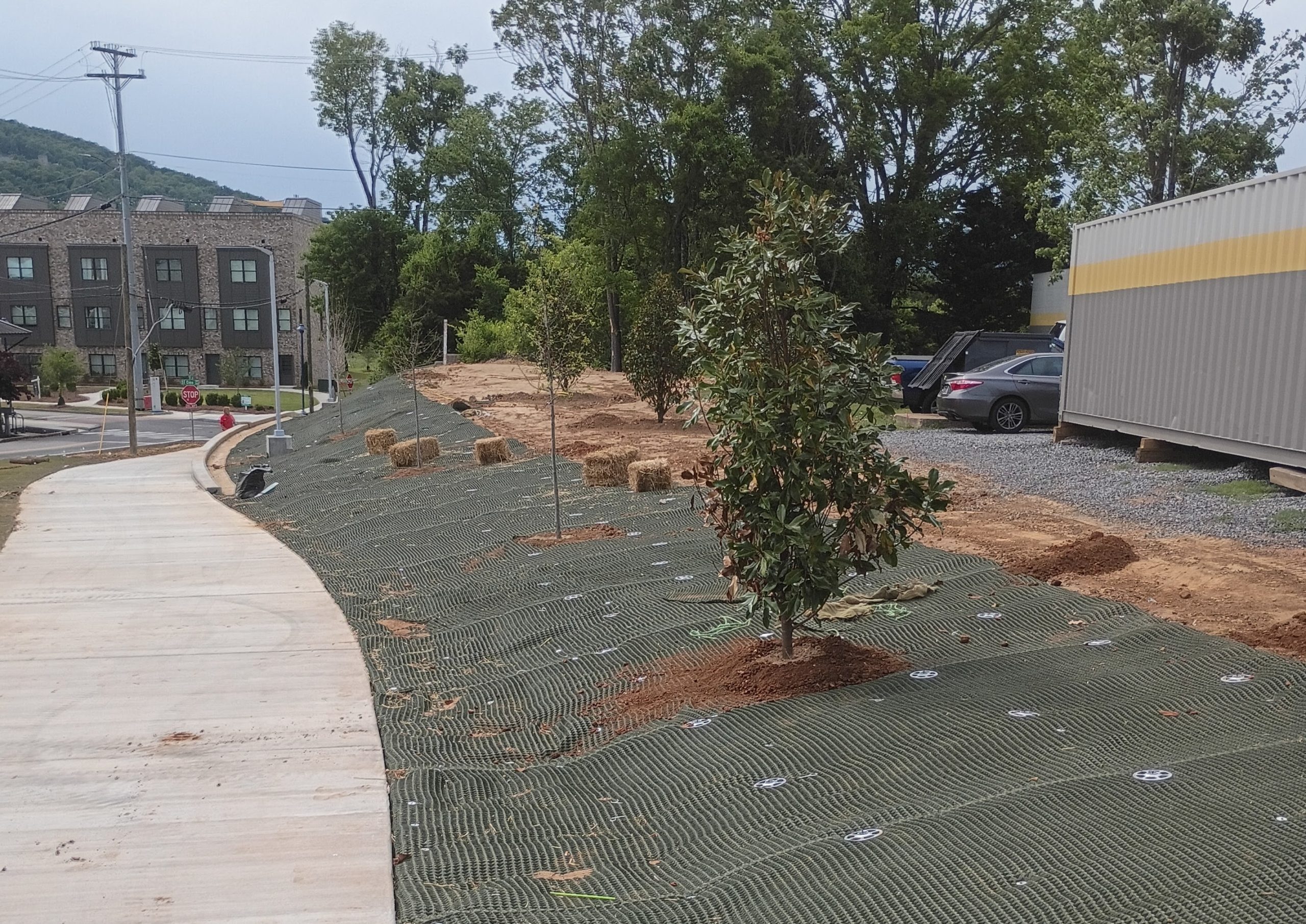
Planting a tree seems simple enough: dig a hole, put the tree in it, cover the roots and add some water. But after years of planting trees throughout Chattanooga and the surrounding area, we can tell you that proper tree planting involves a little more than that.
The decisions you make on planting day can affect the health of that tree for decades.
Whether you're planting a shade tree, ornamental tree, evergreen or a row of privacy trees, proper location, planting depth, soil preparation and watering can make the difference between a tree that struggles and one that thrives.
Here are some of our best tree planting tips for Chattanooga homeowners, based on our experience installing trees throughout the Chattanooga area.
1. Choose the Right Location for Your Tree
Before you ever start digging, think about where the tree will be 10, 20 or even 30 years from now.
One of the most important parts of planting a tree is matching the right tree to the right location.
Consider:
- How large will the tree eventually become?
- How much sunlight does the location receive?
- Does the area drain properly?
- How close is it to the house, driveway or other structures?
- Are there overhead or underground utilities nearby?
- Are you planting for shade, privacy, seasonal color or curb appeal?
A small tree from the nursery may not look intimidating today, but some shade trees eventually develop very large canopies and root systems. Avoid planting a large-growing tree directly against the foundation of your house or in another location where its mature size could create problems.
Drainage is equally important. Don't plant a tree in a low, swampy area where the root system will constantly sit in saturated soil unless you've specifically selected a tree species that tolerates those conditions.
Galloway Pro Tip: Choose your planting location based on the tree's mature size, not how big it is today.
2. Call 811 Before You Dig
Once you've selected your tree planting location, don't immediately grab the shovel.
Call 811 before you dig.
Underground utilities can run through areas where you might never expect them. Having utilities located before digging is an important safety step for any tree planting or landscaping project in Chattanooga involving excavation.
This becomes especially important when installing larger trees because the planting hole can be substantial.
3. Dig the Hole Wider Than the Root Ball
Here's one of our simplest tree planting tips:
Dig a big hole.
As a general rule, we like a planting hole to be approximately twice as wide as the root ball when conditions allow.
Tree roots naturally grow outward. Loosening the surrounding soil gives the developing roots an easier transition from the root ball into the native soil.
The exact dimensions will depend on the tree and site conditions, but don't make the mistake of digging a hole that's barely large enough to squeeze the root ball into.
Galloway Pro Tip: Dig your planting hole approximately twice as wide as the root ball.
4. Evaluate the Existing Soil
Soil preparation is an important part of planting trees in Chattanooga, Tennessee.
Soil conditions can vary considerably from one property to another, and our area has plenty of properties with dense clay soils or drainage challenges.
Once the planting hole is open, take a look at what you're working with.
If the existing native soil is reasonably healthy and suitable for the tree, extensive soil amendments may not be necessary. In many situations, the existing soil is perfectly appropriate.
If you're dealing with particularly poor soil, however, some soil improvement may be beneficial. Depending on the situation, a high-quality planting or soil mix can be incorporated to improve the conditions around the new tree.
Drainage problems deserve special attention. In particularly difficult locations, additional site preparation or drainage improvements may be necessary before planting.
The important thing is to evaluate the existing soil and drainage rather than assuming every property needs exactly the same planting method.
5. Don't Plant Your Tree Too Deep
If there's one mistake we see more than almost any other with improperly planted trees, it's this:
The tree was planted too deep.
Trees aren't fence posts. Burying more of the trunk doesn't make the tree more secure.
The tree's root flare—the area where the trunk begins to widen into the major roots—should remain visible rather than being buried beneath several inches of soil and mulch.
Tree roots primarily spread outward through the soil. Planting a tree excessively deep can create poor conditions around the root system and contribute to long-term tree health problems.
On Chattanooga properties with heavy soil or marginal drainage, we will often intentionally set the root ball somewhat above the surrounding grade rather than creating a bowl where the tree can sit in excessive moisture. Exactly how high depends on the tree, soil and site conditions.
Galloway Pro Tip: Pay close attention to the root flare. One of the biggest tree planting mistakes we see is simply planting the tree too deep.
6. Consider Buying a Larger Tree
When choosing what size tree to purchase, think long-term.
Trees take time to grow.
That's obvious, but it's easy to forget when you're standing at the nursery comparing prices.
A smaller tree may be less expensive today, but you could spend years waiting for it to provide the shade, privacy or visual impact you originally wanted.
For many of our Chattanooga tree planting projects, we recommend considering a larger specimen if the budget, tree species and site allow it.
A larger established tree can provide much more immediate impact in the landscape. Larger trees also require proper handling, installation and watering after planting, so there is a practical limit to how large you should go.
Our advice is simple: buy a quality tree, and don't be afraid to buy a little larger than you initially thought you needed.
Trees are a long-term investment in your property.
7. When Is the Best Time to Plant Trees in Chattanooga?
A lot of homeowners assume trees should only be planted during spring and summer.
That's not necessarily true.
In fact, winter can be an excellent time for tree planting in Chattanooga.
Planting during cooler weather reduces the heat stress associated with Tennessee summers. Many trees are dormant during this period, and nurseries and growers often have good availability of field-grown trees during the dormant season.
Certain growers also wait for deciduous trees to lose their leaves before harvesting and moving them.
Fall and winter planting can give a tree time to begin establishing roots before Chattanooga's intense summer heat arrives.
That doesn't mean trees can't be planted during other parts of the year. We install trees at different times depending on the species, availability and site conditions.
But if you have flexibility, the cooler months can be one of the best times to plant a tree in Chattanooga, TN.
So if you're looking out the window in January thinking it's too cold to plant trees, you may actually be looking at a great planting opportunity.
8. Stake the Tree When Necessary
Not every newly planted tree needs extensive staking.
After planting, check the stability of the root ball. If the tree feels loose or the site is particularly exposed to wind, staking may help keep the tree stable while the roots become established.
The goal isn't to permanently immobilize the tree. Staking should provide temporary support while the tree establishes itself.
9. Add 2–3 Inches of Mulch
After planting, add approximately 2–3 inches of mulch around the tree.
Mulch helps conserve soil moisture, moderate soil temperature and reduce competition from weeds and grass around the tree.
But don't pile mulch against the trunk.
You've probably seen the infamous "mulch volcano" where mulch is piled high around the base of a tree. Avoid it.
Keep the root flare and trunk base exposed and spread the mulch outward instead.
10. Water Your Newly Planted Tree Properly
Your job isn't finished when the tree goes into the ground.
Proper watering is one of the most important parts of establishing a newly planted tree.
New trees need consistent moisture while their roots become established. How frequently you'll need to water depends on the tree, soil, rainfall, season and drainage conditions.
There is also such a thing as too much water.
Constantly saturated soil can create serious problems for tree roots and can be just as detrimental as allowing a newly planted tree to become excessively dry.
This is another reason proper planting height and drainage matter so much.
The goal is consistent, appropriate moisture—not permanently saturated soil.
Think Long-Term When Planting a Tree
A tree isn't like planting a few annual flowers that you'll replace next season.
A properly selected and planted tree may become part of your property for decades.
That's why we encourage Chattanooga homeowners to think beyond today's landscape. Consider the mature size of the tree, its location, soil conditions, drainage, sunlight and what you ultimately want the tree to accomplish.
Spend a little more time planning before you start digging, and you'll greatly improve your chances of enjoying a healthy, beautiful tree for years to come.
And if you're unsure about the tree, location or planting method, ask an experienced landscaping professional before you plant it. Fixing a poor location or planting-depth problem is much easier before a several-hundred-pound root ball is sitting in the ground.
Frequently Asked Questions About Tree Planting in Chattanooga
How deep should you plant a tree?
The most important thing is to avoid planting the tree too deeply. The root flare—where the trunk begins to widen into the root system—should remain visible.
On properties with heavy clay or poor drainage, the tree may need to be planted somewhat above the surrounding grade. The proper planting depth ultimately depends on the tree and site conditions.
How wide should the hole be when planting a tree?
A good general rule is to dig a hole approximately twice as wide as the tree's root ball. A wider planting area helps loosen the surrounding soil so developing roots can spread outward.
What is the best time of year to plant trees in Chattanooga, Tennessee?
Fall and winter can be excellent times for tree planting in Chattanooga. Cooler temperatures reduce heat stress, and many trees are dormant during this period.
Spring planting can also be successful, while trees planted during the heat of summer generally require greater attention to watering and establishment.
Should I amend the soil when planting a tree?
Not necessarily.
If the native soil is suitable, extensive soil amendments may not be needed. Poor soil or difficult drainage conditions may require additional preparation. The best approach depends on the specific property rather than automatically adding amended soil to every tree planting hole.
How much mulch should I put around a newly planted tree?
Approximately 2–3 inches of mulch is generally a good amount. Spread the mulch around the root zone rather than piling it against the trunk.
Avoid creating a "mulch volcano."
How often should I water a newly planted tree?
There isn't one watering schedule that works for every tree.
Watering frequency depends on the size and species of the tree, soil conditions, drainage, temperature and rainfall. Newly planted trees need consistent moisture while becoming established, but the soil should not remain constantly saturated.
Should newly planted trees be staked?
Only when necessary.
If the root ball is stable and the tree isn't moving excessively, staking may not be needed. Trees that are unstable or located in exposed areas may benefit from temporary staking while their roots become established.
What are good trees to plant for privacy?
Evergreen trees are popular for creating natural privacy screens because they maintain foliage throughout the year. The best privacy tree depends on available space, sunlight, drainage and how tall and wide you ultimately want the screen to become.
Professional guidance can be particularly valuable when planning a row of privacy trees in Chattanooga, because spacing them correctly today can prevent overcrowding years from now.
Professional Tree Planting in Chattanooga, TN
At Galloway's Lawn Service, we specialize in professional tree planting and tree installation in Chattanooga and surrounding communities.
Our tree planting services include:
- Ornamental tree planting for seasonal color and curb appeal
- Shade tree installation for long-term beauty and usable outdoor space
- Evergreen tree planting
- Privacy tree installation for natural screening and property separation
We can help with tree selection, placement, site preparation, professional installation and guidance for caring for your new trees after planting.
Whether you're planting one ornamental tree in the front yard or installing a complete evergreen privacy screen along a property line, the goal is the same:
Plant the right tree, in the right place, the right way.
If you're considering professional tree planting in Chattanooga, TN, contact the Galloway Team to discuss your property and request an estimate.